Discovery · Audience analysis
Learner personas: designing for specific people, not “the audience”
Before I design a single screen, I map who I’m designing for. These six learner personas are a representative audience analysis for an enterprise compliance program — a synthesis of role, day-to-day context, technology comfort, and learning preferences. They turn “the audience” from an abstraction into specific people whose needs drive concrete design decisions.
Modality & pacing
A maintenance tech with limited tech comfort gets simplified, demonstration-led paths; an IT specialist gets self-directed depth. One program, deliberately differentiated.
Support & scaffolding
Personas show where to invest in job aids, hands-on practice, and peer coaching — and where learners can move on their own.
Tone & examples
Scenarios are drawn from each role’s real tasks, so the content reads as relevant rather than generic compliance boilerplate.
Accessibility & reach
A spread of ages, devices, and confidence levels is designed for from the start — not retrofitted at the end.
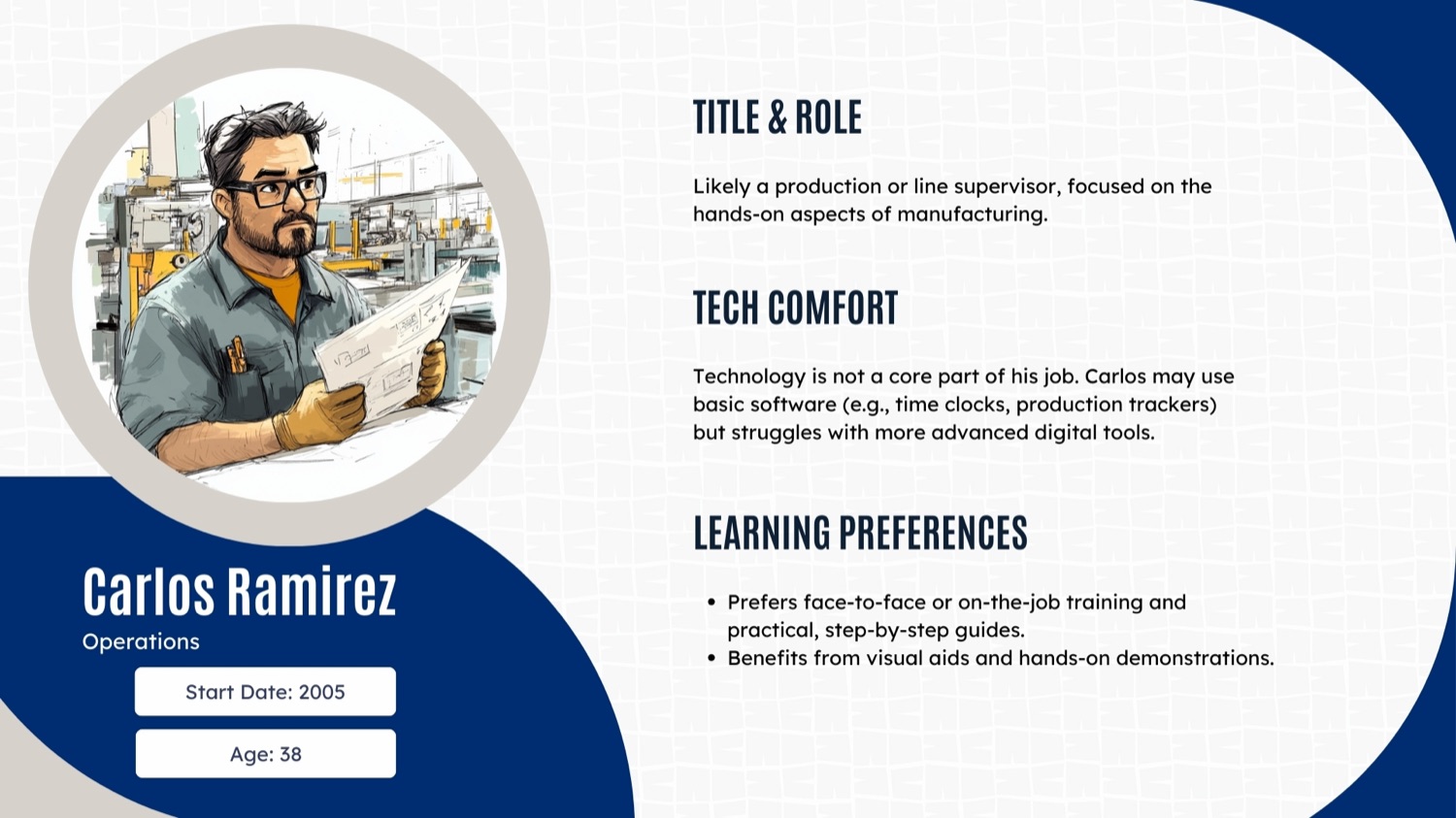
Carlos · Operations
Hands-on supervisor, low tech comfort — prefers face-to-face, step-by-step guidance.
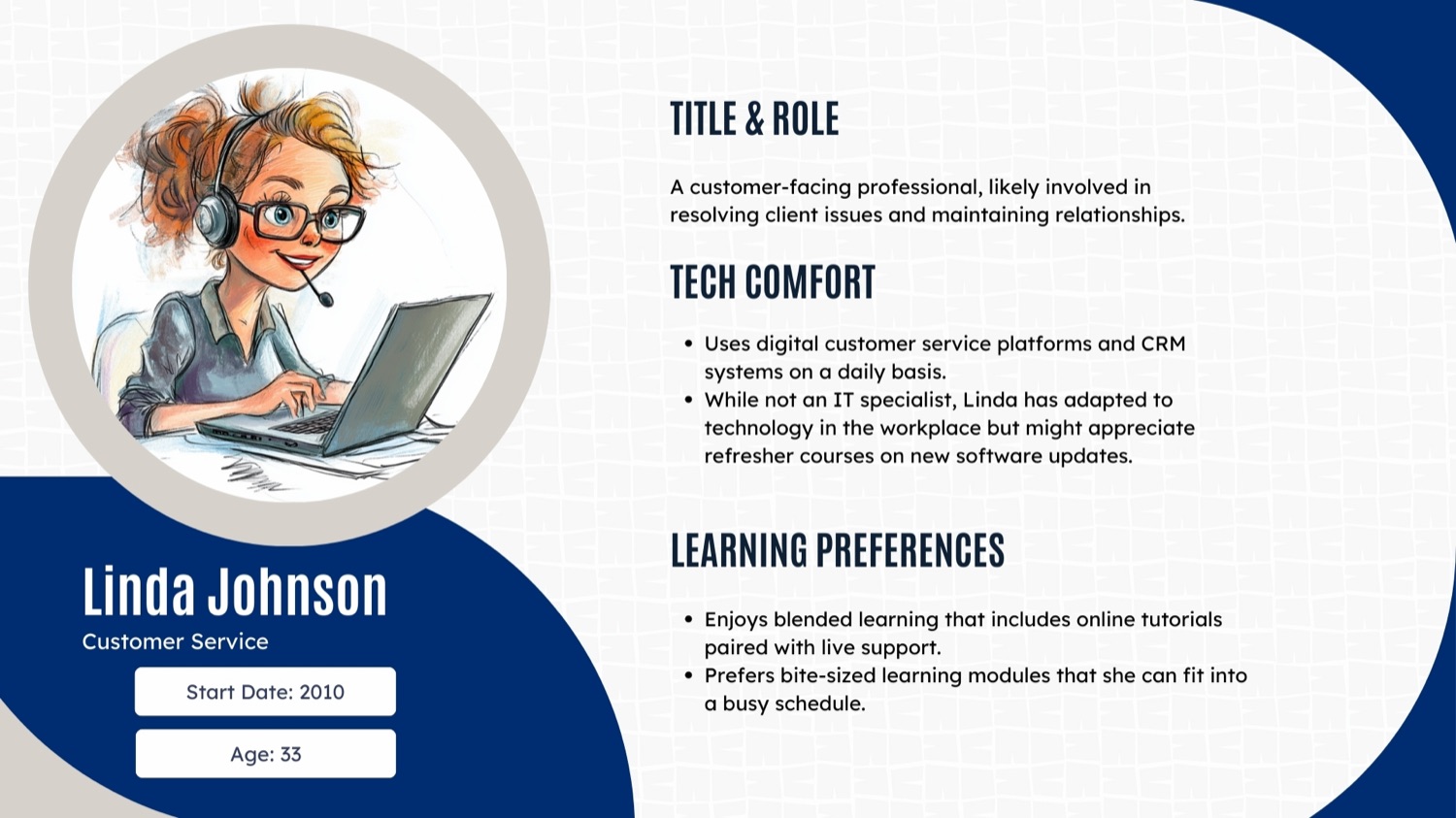
Linda · Customer Service
CRM-fluent, time-pressed — prefers bite-sized blended learning with live support.
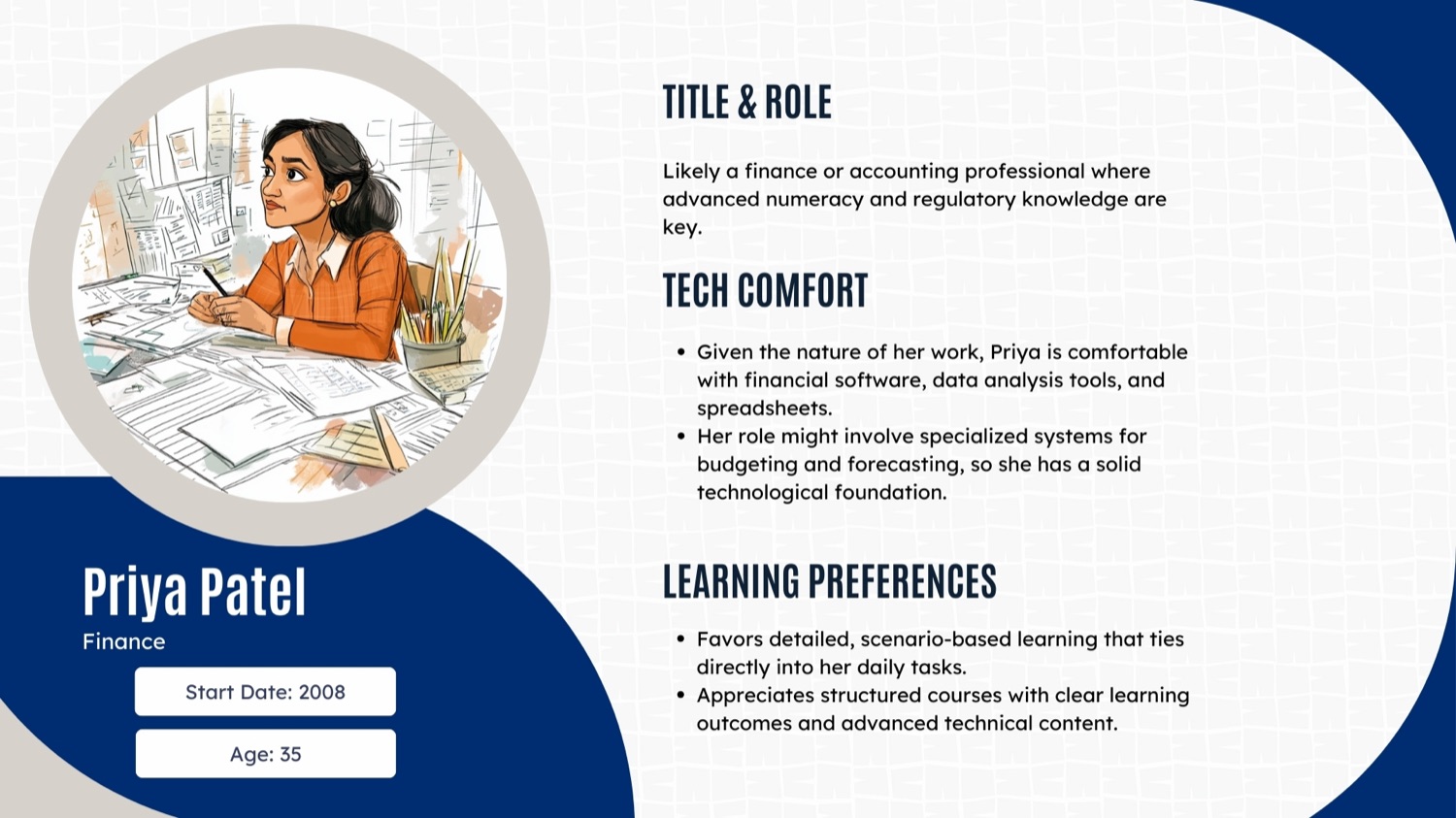
Priya · Finance
Software-confident analyst — favors detailed, scenario-based modules tied to daily tasks.
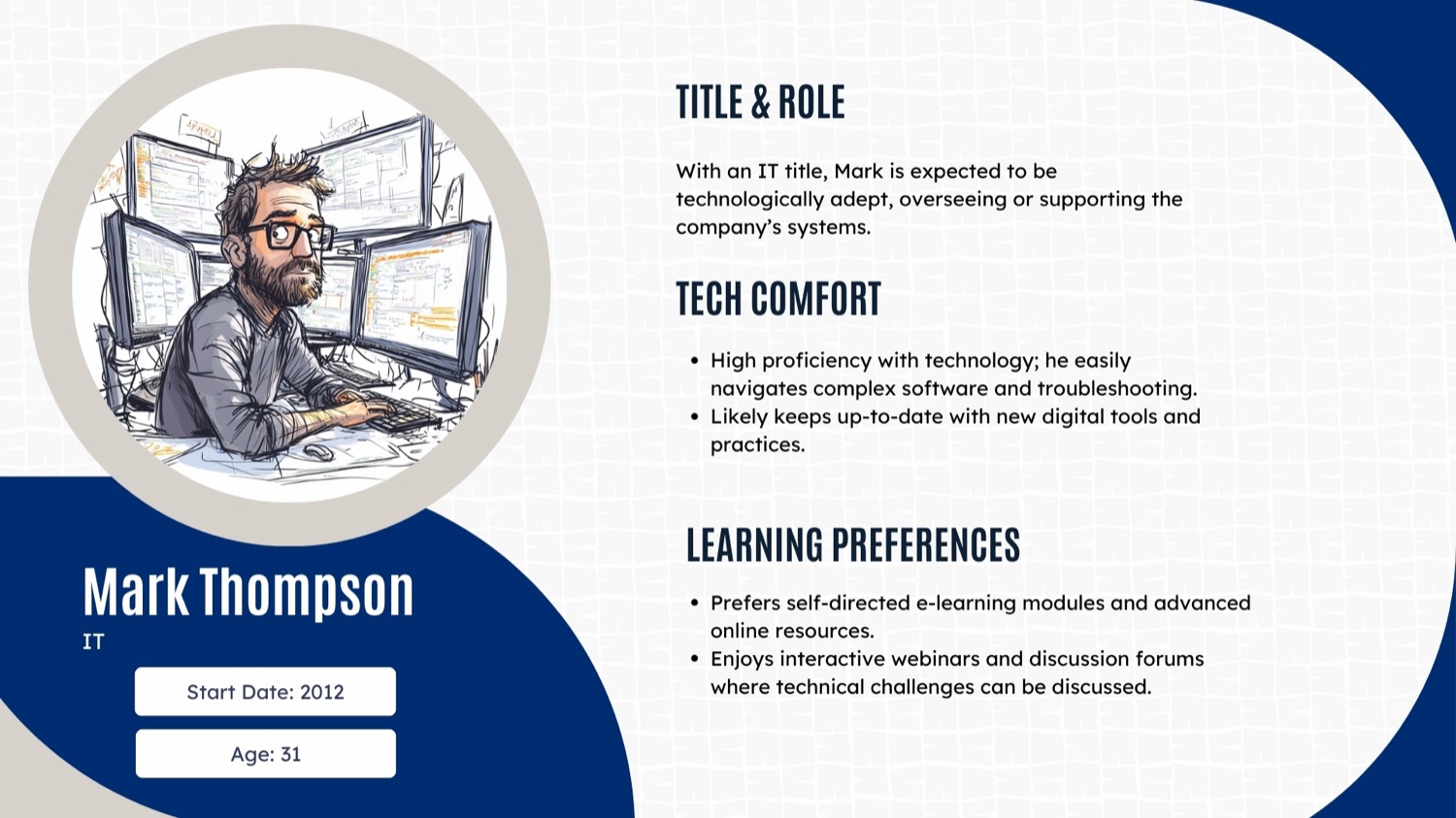
Mark · IT
Highly tech-proficient — prefers self-directed e-learning and discussion forums.
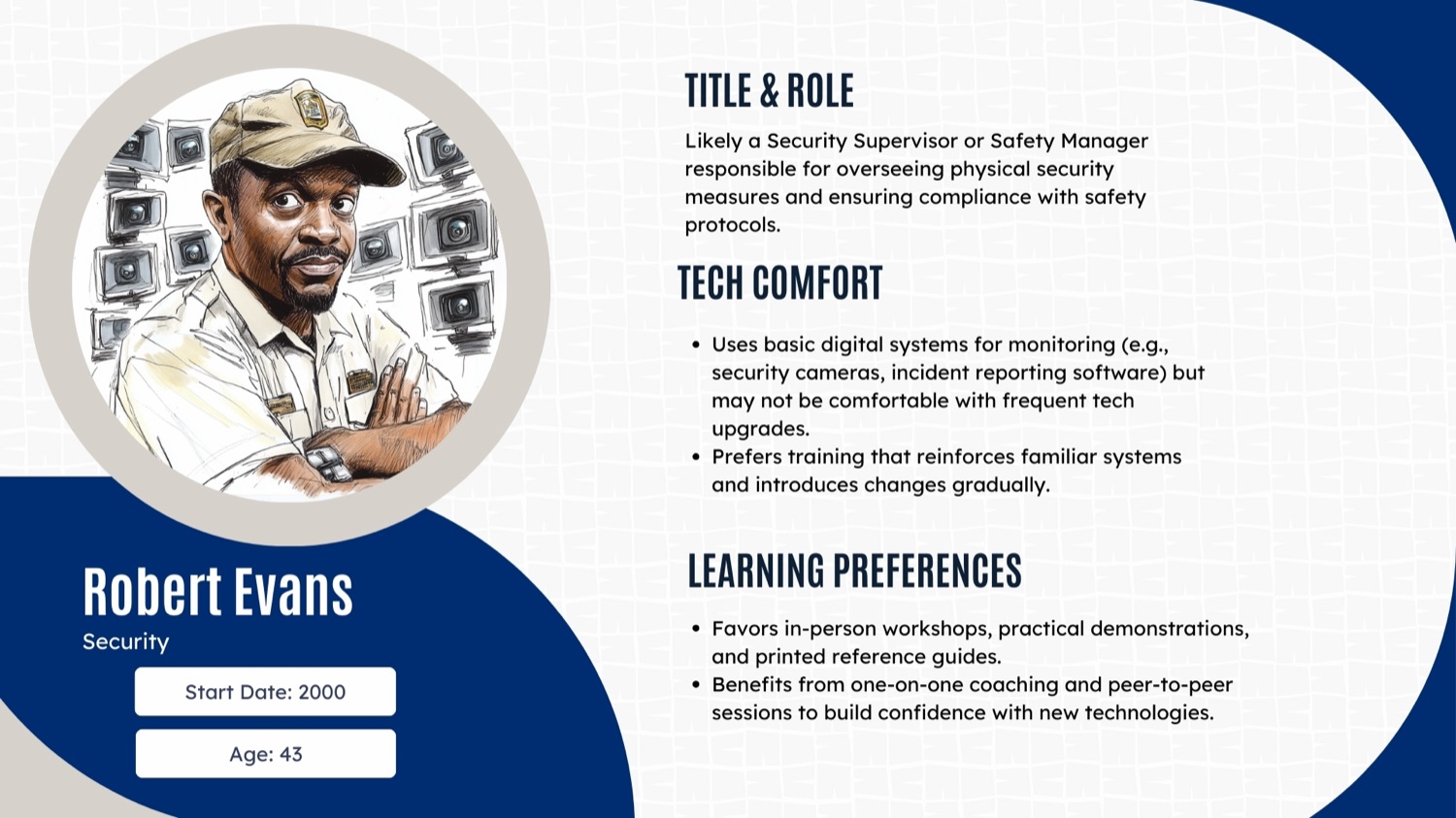
Robert · Security
Safety supervisor, moderate tech comfort — prefers in-person workshops and gradual change.
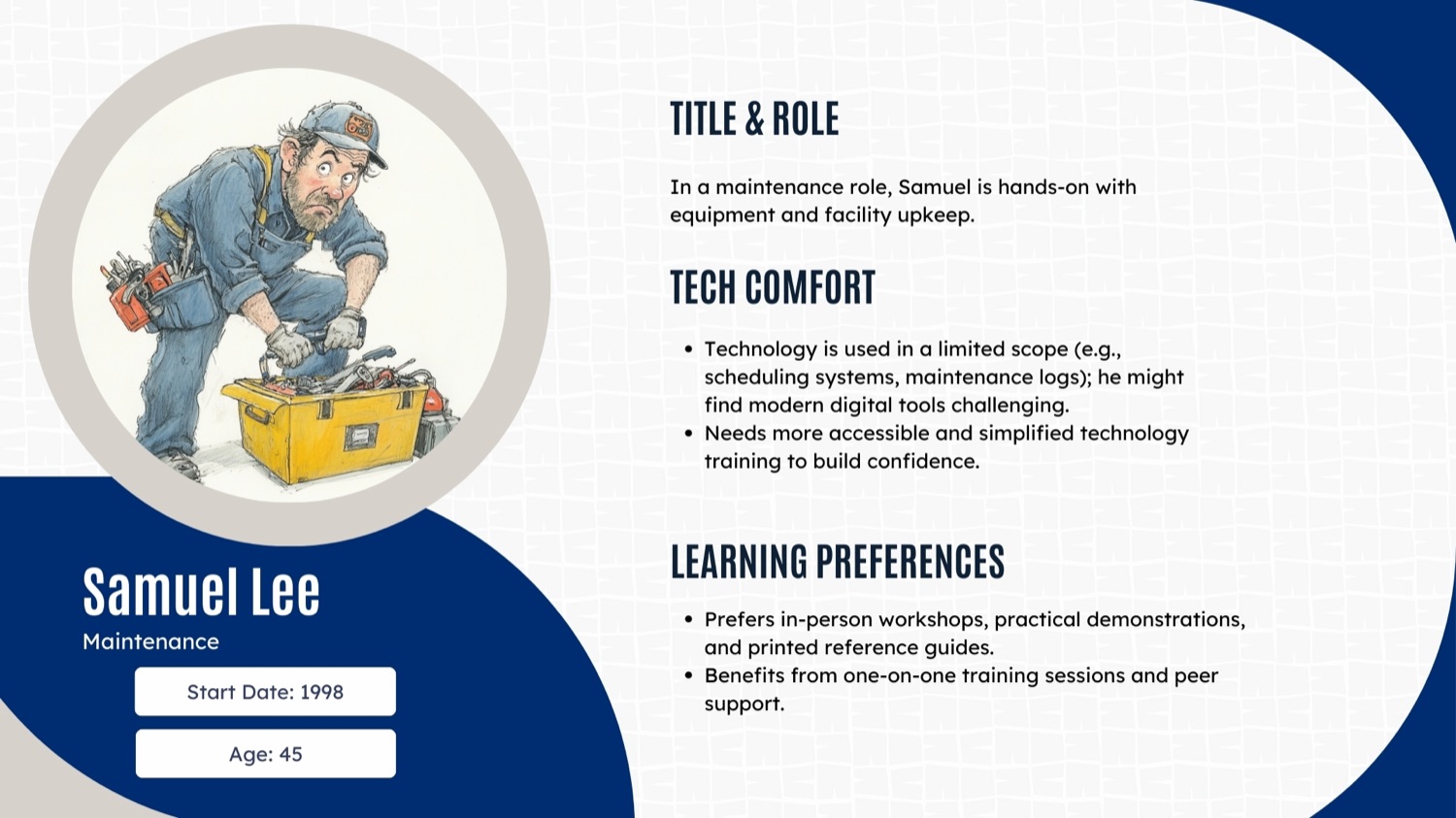
Samuel · Maintenance
Hands-on technician, limited tech comfort — needs simplified, in-person training and peer support.
Names and details are illustrative composites built from role and workforce data — not real individuals. This is the kind of discovery artifact I produce at the start of a program, so every later design decision can trace back to a real audience need.